

TL;DR
A residential inspection focuses on a single-family home’s safety, structure, and major systems and follows a fairly standard checklist. A commercial inspection covers a much wider scope, takes more time, involves multiple specialists, includes financial and code review, and produces a much more detailed report aimed at protecting business investment decisions.
If you’ve ever bought a house, you probably know the routine. The inspector shows up, walks around for two or three hours, climbs into the attic, runs the appliances, checks the roof, and hands you a report a day or two later. Simple enough. So when someone buys a commercial property for the first time, they often assume it’ll work the same way. It doesn’t. The differences between residential vs commercial property inspection go way deeper than building size, and not knowing those differences before you sign a contract can leave you with a building full of problems you didn’t know to ask about.
We do both kinds of inspections every week, and the questions we get from first-time commercial buyers tell us most people don’t realize how different the two processes really are. Here’s the honest breakdown of what changes, why it changes, and what you should expect from each.
What a Residential Inspection Actually Covers
A typical home inspection follows a fairly standardized framework. The inspector evaluates the visible and accessible parts of the home and reports on their condition. The areas covered usually include:
- Roof, gutters, flashing, and visible chimney
- Exterior siding, trim, windows, and doors
- Foundation and visible structural elements
- Attic, insulation, and ventilation
- Plumbing fixtures, drains, and visible supply lines
- Electrical panel, outlets, switches, and visible wiring
- HVAC system condition and operation
- Built-in appliances
- Interior walls, ceilings, floors, and finishes
- Garage, driveway, walkways, and grading
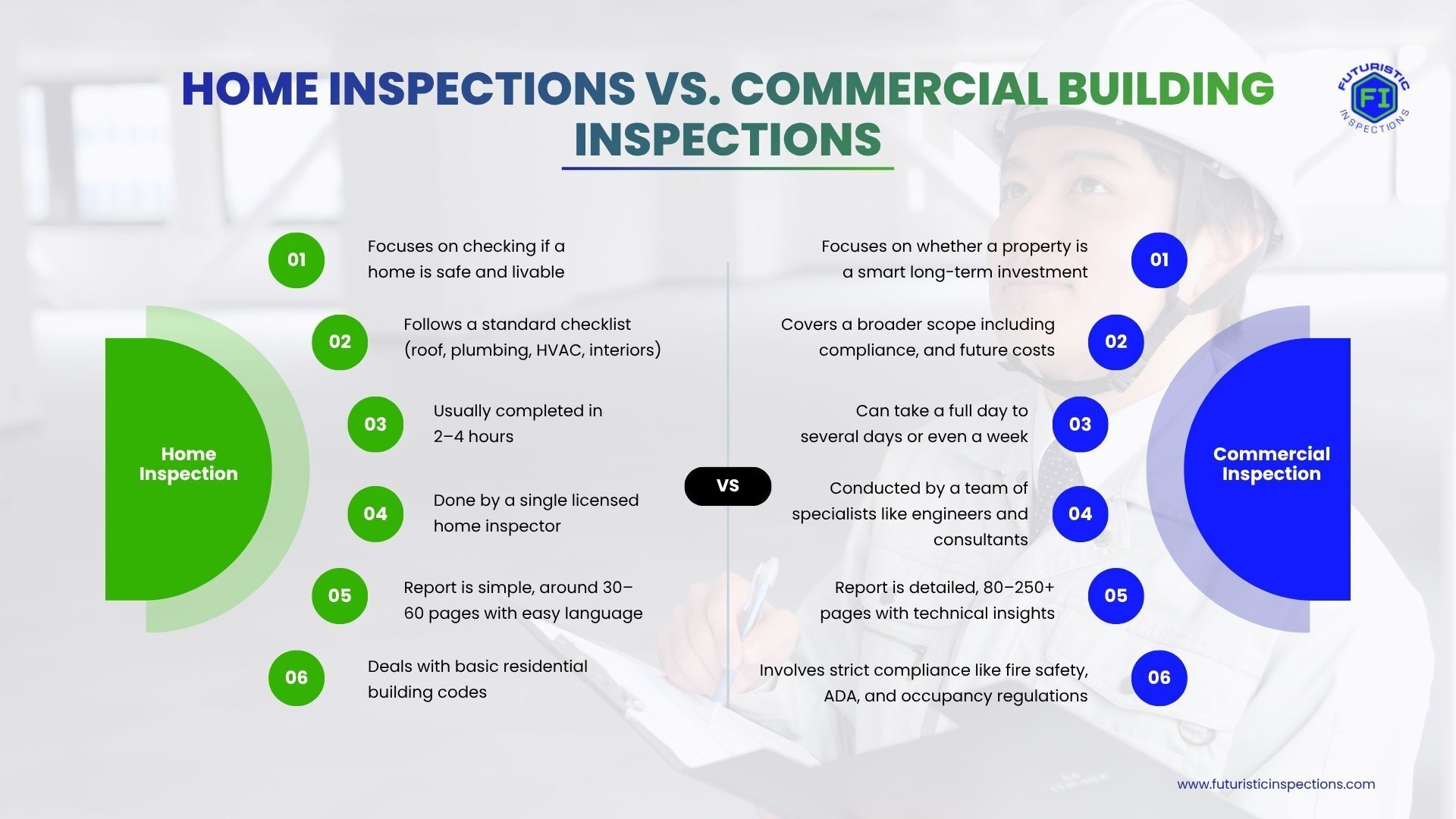
The whole inspection usually takes 2 to 4 hours, depending on the size of the home, and the report typically runs 30 to 60 pages with photos. Buyers use it to negotiate repairs, request credits, or back out of a deal if the issues are serious. It’s a snapshot of a home’s overall condition meant for a single owner.
What a Commercial Inspection Actually Covers
Commercial inspections are bigger in every way. The building itself is usually larger and more complex, but more importantly, the buyer’s needs are different. A commercial buyer isn’t just looking at whether the roof leaks. They’re looking at lifecycle costs, code compliance, capital expenditures over the next 5 to 20 years, lease obligations, ADA compliance, fire and life safety systems, and how the building’s condition affects business operations.
A standard commercial inspection (often called a property condition assessment, or PCA) typically includes:
- Site review (paving, drainage, landscaping, lighting, signage)
- Building envelope (roof, walls, windows, doors, sealants)
- Structural systems (foundation, framing, load paths)
- Mechanical systems (HVAC, including chillers, boilers, rooftop units)
- Electrical systems (service entry, distribution, panels, emergency power)
- Plumbing systems (supply, waste, water heaters, fixtures)
- Fire protection (sprinklers, alarms, extinguishers, exits)
- Vertical transportation (elevators, escalators if applicable)
- Interior finishes and tenant improvements
- ADA compliance and accessibility review
- Life expectancy estimates for major systems
- Capital expenditure forecast for 5, 10, or 20 years
The report can run 80 to 250 pages and includes cost estimates for both immediate repairs and long-term replacement of major systems. It’s designed for investors, lenders, and business owners who need to make multimillion-dollar decisions with their eyes open.
How Long Each Takes
Residential inspections are quick. A 2,000 square foot house takes about 2 to 3 hours on site. A larger home with a finished basement and a detached garage might take 4 hours.
Commercial inspections take much longer. A small retail building might be done in 4 to 6 hours by a single inspector. A 50,000 square foot industrial property could take 2 to 5 days and involve multiple specialists. Larger campuses or multi-tenant buildings can stretch to a week or more, especially if testing samples or environmental review is involved. Reports also take longer to assemble because the data sets are bigger.
Who Conducts Each Type
This is one of the bigger differences people don’t expect. A residential inspection is usually done by a single licensed home inspector who covers all systems with general knowledge across the board. They’ve been trained in residential construction and building codes that apply to homes.
A commercial inspection is often conducted by a team. Lead inspectors coordinate, but specific systems may be reviewed by:
- Structural engineers for unique foundation or framing concerns
- HVAC specialists for large mechanical systems
- Electrical contractors for high-voltage service
- Roofing experts for membrane and built-up roof systems
- Environmental consultants for asbestos, lead, mold, or radon
- ADA compliance specialists
- Code consultants for occupancy and zoning issues
Commercial inspectors usually have engineering backgrounds, commercial construction experience, or both. The depth of expertise required is one of the main reasons commercial inspections cost more.
What Each Report Looks Like
A home inspection report is meant to be read by a buyer who is not a professional. It uses plain language, lots of photos, and clear ratings like “satisfactory,” “marginal,” or “needs repair.” It’s organized by area of the home (roof, kitchen, bathroom, etc.) and is designed for someone making a personal decision.
A commercial property condition report is meant to be read by investors, asset managers, lenders, or attorneys. It uses technical language, includes cost data and life expectancy tables, and is organized by system rather than area. It also includes references to codes, standards, and industry benchmarks. The report often becomes part of due diligence files used in loan underwriting and may be reviewed by attorneys before closing.
Cost Comparison
Residential inspections in most US markets run from around $300 to $700, depending on home size and add-ons like radon testing or sewer scopes.
Commercial inspections vary much more. A small office building might be $1,500 to $3,500. A mid-sized retail or industrial property might be $4,000 to $10,000. Larger or more complex properties can easily run $15,000 or more, especially if environmental testing or specialized engineering is involved. The cost reflects the time, the expertise, and the level of detail required.
It sounds steep until you compare it to the deal size. On a $5 million commercial purchase, a $7,000 inspection is barely a rounding error, and it can flag issues that save tens of thousands or kill a bad deal entirely.
Why Code Compliance Is a Bigger Deal in Commercial
Commercial buildings are subject to a different layer of building codes than homes. Fire codes, occupancy classifications, ADA requirements, energy codes, parking and signage rules, and health codes all apply depending on the use of the building. A property that looks great on the surface can have hidden compliance issues that the new owner inherits the day they take title.
Common code surprises in commercial inspections include:
- Old fire sprinkler systems no longer meet the current code
- Insufficient exit signage or emergency lighting
- Stairwells or ramps that don’t meet ADA standards
- Roof anchor points are missing for HVAC servicing
- Outdated electrical panels that need full replacement before tenants can move in
- Restroom counts that don’t meet occupancy requirements
- Grease traps or interceptors are out of compliance for food tenants
Residential code issues are usually simpler and easier to bring up to spec. Commercial code issues can require full system replacements that cost five or six figures.
What a Buyer Should Bring to Each Inspection
For a home inspection, the buyer should plan to attend at least the last hour of the inspection so the inspector can walk them through findings in person. Bring a notepad and ask questions. Most inspectors welcome questions and explanations.
For a commercial inspection, the buyer or their representative should attend at the beginning to discuss the scope and at the end for a verbal walkthrough. They should also bring or request copies of:
- Floor plans and as-built drawings if available
- Maintenance records for major systems
- Existing tenant leases
- Recent capital improvement records
- Service contracts in place
- Warranties on roofs and HVAC equipment
- Any recent inspection reports from prior owners
Having this paperwork lets the inspector cross-reference what they see on site with what should be there.
When Each Is Required
Home inspections are not legally required in most states, but they’re standard practice in residential real estate transactions, and most lenders won’t issue a mortgage without one. Buyers can waive them, but it’s rarely a good idea outside of competitive markets where people are taking real risks.
Commercial inspections are similarly not legally required, but most commercial lenders require them as part of the loan underwriting process, especially for SBA loans and conventional commercial mortgages. Even cash buyers usually order them as standard due diligence.
Common Misconceptions to Avoid
Two big ones come up often.
“My home inspector can do my commercial building.” Not really. A residential inspector is trained for residential systems. A small commercial building might be doable, but anything with a flat membrane roof, a rooftop HVAC unit, a fire suppression system, or commercial electrical service needs a commercial inspector. Hiring the wrong type of inspector means you’ll miss things that matter.
“The seller already had it inspected, so I don’t need one.” Always get your own inspection. The previous report served the previous buyer or seller. You need findings tied to your decision, your timeline, and your needs.
Wrapping Up
Residential and commercial inspections share a goal, which is to help buyers make informed decisions. But the depth, scope, cost, expertise, and reporting style are very different. Knowing which one you need and what to expect saves time, money, and a lot of stress on both sides of a deal. Whether you’re buying your first home or your tenth commercial property, the inspection is one of the most important steps in the whole process.
Don’t shortcut it.When you’re ready to schedule an inspection, we’re happy to walk you through what makes sense for your purchase, what’s included, and what to expect on report day. At Futuristic Inspections, we handle both residential and commercial work with the right expertise on the ground for each. Give us a call when you’re ready, and we’ll take care of it.
Frequently Asked Questions (FAQs)
1. How much does a commercial property inspection usually cost?
Commercial inspection costs typically range from $1,500 for small retail spaces to $15,000 or more for large industrial or multi-tenant properties. Pricing depends on building size, complexity, age, the systems involved, and whether environmental testing is part of the scope. Most fall in the $3,000 to $7,000 range.
2. Can I use the same inspector for both my home and my office building?
Usually no. Residential inspectors are trained for single-family homes and may not have the expertise to evaluate commercial systems like rooftop HVAC, fire suppression, or commercial electrical. A qualified commercial inspector or property condition assessor is the right choice for any commercial building.
3. How long does a commercial property inspection take?
Most small commercial inspections take 4 to 8 hours on site, with reports delivered within 5 to 10 business days. Larger properties or campuses can take several days on-site and 2 to 3 weeks for the final report. The complexity of the systems involved affects timelines significantly.
4. What’s a property condition assessment?
A property condition assessment, or PCA, is the formal name for a commercial inspection that follows industry standards like ASTM E2018. It includes a walk-through, system evaluations, life expectancy estimates, and capital expenditure forecasts. Lenders often require a PCA before funding a commercial purchase.
5. Do I need an inspection if I’m buying a brand-new commercial building?
Yes. New construction often has issues that aren’t visible to a casual buyer, including improperly installed systems, missed code requirements, or rushed finish work. A commercial inspection on a new building gives you leverage to get items fixed under warranty before you take occupancy.