

If you’ve ever opened a home inspection report and felt your confidence immediately drop, you’re not alone. Pages of findings, technical language, categorized items, photos… It can feel like a lot. But here’s the truth: a home inspection report is not designed to overwhelm you. It’s designed to inform you.
At Futuristic Inspections, we use modern inspection technology and plain-language communication to make sure every client, whether you’re a buyer, seller, realtor, or investor, understands not just what we found, but what it actually means for you. In this guide, we walk through exactly how to read a home inspection report without overthinking a single page.
Why Inspection Reports Often Feel Overwhelming at First Glance
Most inspection reports aren’t written to confuse you. They’re written to be thorough. A professional home inspector is trained to document everything visible and accessible at the time of inspection. That means the report covers a wide range of systems and components, from the roof all the way down to the foundation, from electrical panels to HVAC units, windows, plumbing, insulation, and more.
The result is often a long document. And when buyers or sellers see a long document, the natural instinct is to assume the worst. But length is not a measure of severity. A 50-item report and a 15-item report can reflect homes in very similar conditions. The difference is often the depth of documentation and the technology used during the inspection.
Understanding that a thorough report is a sign of a thorough inspector, not a failing home, is the first step toward reading it clearly. That perspective shift alone can make a huge difference.
How Inspectors Organize Findings and Why That Structure Matters
Most professional inspection reports are organized by system or location. You’ll typically find sections covering:
- Roofing and exterior systems
- Foundation and structural components
- Electrical systems
- Plumbing systems
- HVAC systems
- Interior components and accessible areas
- Attic and insulation (when safely accessible)
This structure is intentional. It helps you locate findings quickly and understand which part of the home each item relates to. When you read a report section by section rather than scanning the full document at once, it becomes much more manageable.
At Futuristic Inspections, our digital reports are organized so that navigation feels natural. Every section includes clear photos, plain-language explanations, and summaries so you can see exactly what was found and where. Clients consistently tell us that our reports are among the easiest they’ve ever read, because we genuinely care about making sure you walk away understanding what you’re looking at.
What Does a Home Inspector Actually Look For?
This is one of the most common questions we hear, and it’s a great one. During a residential home inspection, a certified inspector evaluates the home’s major structural and mechanical systems. At Futuristic Inspections, our inspection checklist includes:
- Structural components, including the foundation, walls, and framing
- Roofing systems, flashings, and gutters
- Electrical wiring, panels, outlets, and safety hazards
- Plumbing pipes, water heaters, and drainage
- HVAC systems, including heating, cooling, and ventilation
- Windows, doors, and interior surfaces
- Attic ventilation and insulation levels
- Appliances and built-in equipment
- Exterior grading and drainage around the property
That comprehensive scope is exactly why reports can look lengthy. It’s also exactly why getting a thorough inspection is so important for protecting your investment.
Understanding Severity Levels and Inspector Language
One of the most important skills in reading an inspection report is understanding how inspectors categorize their findings. Most reports use a severity or urgency classification system. While exact labels can vary by company, findings generally fall into categories like:
- Safety concerns — items that present a risk to occupants or the structure
- Repair or replace — items that need professional attention soon
- Monitor — items to watch over time that are not immediately urgent
- Maintenance — routine upkeep items common to any home
Learning to read these categories is far more valuable than counting the total number of findings. A report with thirty maintenance items and zero safety concerns tells a very different story from one with five safety concerns and ten repair items.
Inspector language is also typically objective and measured. Words like “deficient,” “improper,” or “recommend evaluation by a licensed professional” carry specific meaning. When something does not feel clear, ask your inspector to explain it. That is what we are here for. Future Lilly, the owner, operator, and inspector behind Futuristic Inspections, is known for walking clients through every detail in an easy-to-understand way, as you will hear directly from clients in our reviews.
What Requires Immediate Attention Versus Routine Maintenance?
Not every finding in an inspection report needs to be addressed before closing. One of the most valuable things an inspector can do is help you understand which findings matter most right now and which ones can wait.
Here is a simple way to think about it:
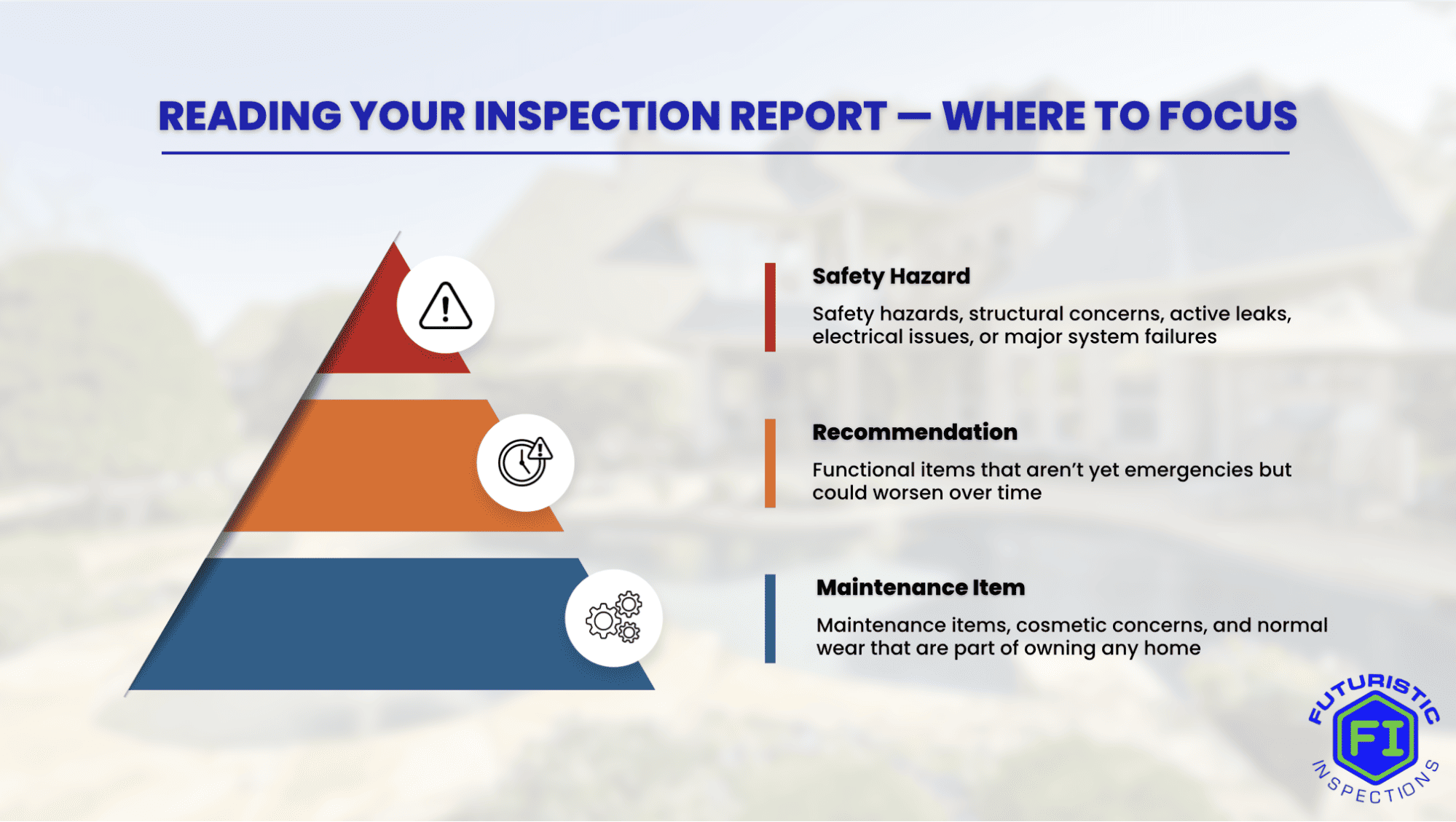
Address immediately: Safety hazards, structural concerns, active leaks, electrical issues, or major system failures that could worsen quickly or pose a risk to occupants.
Address soon: Functional items that are not emergencies yet but could become more costly if left unattended for too long.
Plan for later: Maintenance items, cosmetic concerns, and normal wear and tear that are simply part of owning any home.
This prioritization is especially important in active real estate transactions where negotiations happen quickly, and decisions need to be made under time pressure. Knowing the difference between what is urgent and what can wait gives you real negotiating power.
How Modern Inspection Technology Improves Clarity and Accuracy
At Futuristic Inspections, technology is not optional. It is part of every single inspection. Advanced tools do not just help us find more; they help us show you what we are finding and explain it clearly in real time.
Here is what that looks like in practice:
Thermal Imaging (Infrared Scanning): A thermal camera detects temperature differences in building materials that are not visible to the naked eye. This helps identify hidden moisture intrusion, insulation gaps, and electrical issues before they become costly problems.
Sewer Camera Inspections: A specialized camera goes directly into the underground sewer line to identify blockages, root intrusion, or line damage. This is something a standard visual inspection simply cannot catch.
ZipLevel Foundation Checks: We use a ZipLevel high-precision altimeter to measure vertical elevation differences across the foundation. This gives you a clear, data-backed picture of foundation movement or settling that would otherwise go undetected.
Wood Destroying Insect (WDI) Reports: In North Texas, termites and other wood-destroying insects are a real concern. Our WDI inspections identify the presence or evidence of infesting organisms that can compromise the structural integrity of a home.
Digital Reports with Photos: Every finding is documented with a photo and a plain-language explanation so you can see exactly what we saw. Reports are delivered digitally, and guaranteed same-day reports of the inspection.
When you can see what the inspector sees, the report stops being abstract and starts being genuinely useful. That is the difference technology makes.
How Buyers, Sellers, and Realtors Should Use the Report During Negotiations
An inspection report is a tool, not a verdict. How you use it depends on your role in the transaction.
For buyers: Focus on safety concerns and major system issues first. Routine maintenance items are not leverage points. They are part of owning a home. Use the report to understand the property’s real condition and negotiate where it truly matters.
For sellers: A pre-listing inspection allows you to address concerns proactively, set realistic expectations, and enter negotiations with confidence rather than surprise. Sellers who come to the table informed are sellers who close faster and with fewer last-minute complications.
For realtors: Clear inspection findings help you guide clients toward informed decisions rather than emotional reactions. An inspector who communicates clearly is a genuine partner in smoother, faster transactions. That is why so many DFW realtors recommend Futuristic Inspections to their clients by name.
The inspection report is most powerful when it is used as a communication tool, not a battleground.
How Futuristic Inspections Delivers Clear, Actionable Reports Across DFW
Serving Collin County, Dallas County, Denton County, and Tarrant County, Futuristic Inspections is built on a simple belief: when clients understand their report, they make better decisions. Every inspection includes modern technology, plain-language explanations, and direct communication before, during, and after the inspection.
We serve buyers, sellers, real estate agents, investors, landlords, and first-time homeowners across Frisco, Plano, McKinney, Allen, Prosper, Little Elm, Melissa, Fort Worth, Dallas, and surrounding North Texas communities. Whether you are purchasing your first home or evaluating a commercial property, the report you receive from Futuristic Inspections is designed to help you move forward with clarity, not confusion.
With a 5.0 Google rating based on more than 170 reviews, our clients consistently point to the same things: Future is thorough, professional, easy to understand, and genuinely invested in your outcome. That is not an accident. That is how we operate every single day.
Our reports are delivered digitally, same day in all cases, with photos, summaries, and findings organized so they are easy to navigate and actually use.
Frequently Asked Questions (FAQs)
What is included in a home inspection report?
A home inspection report covers the structural components, roofing, electrical systems, plumbing, HVAC, attic, insulation, windows, doors, foundation, and safety hazards. Every finding is documented with photos and explanations.
How long does a home inspection take?
Most residential home inspections take between two and four hours, depending on the size and condition of the property.
How soon will I receive my report?
At Futuristic Inspections, clients receive their report the same day, typically within 2 hours of the inspection.
Should I attend the home inspection?
Yes, absolutely. Attending the inspection gives you the chance to ask questions in real time and see findings firsthand. Future Lilly is known for explaining things clearly on-site, so you leave feeling informed, not anxious.
How much does a home inspection cost in North Texas?
Most standard single-family home inspections in the DFW area price range starts around $420, depending on the size of the home, its age, and whether specialty services like thermal imaging or a sewer scope are included. Contact us for a transparent quote with no hidden fees.
Do I need a home inspection on a new construction home?
Yes. Even newly built homes can have defects or installation issues. A phase inspection during construction or a final walkthrough inspection ensures everything was built to standard before you close.
Final Thought: The Report Is Not the Story. Your Understanding Is.
Every home has findings. What separates a stressful inspection experience from a confident one is not the number of items in the report. It is how clearly those items are explained.
At Futuristic Inspections, we do not just hand you a report. We make sure you understand it. We go above and beyond for every client because we genuinely love what we do and care about the outcome. From the moment we arrive at the property to the moment you have questions a week or years after reading the report, we are here.Ready to schedule? Reach out at future@futuristicinspections.com or call (469) 573-4677. You can also book directly online at futuristicinspections.com. We serve the entire DFW area Monday through Saturday, 7:00 a.m. to 7:00 p.m.