

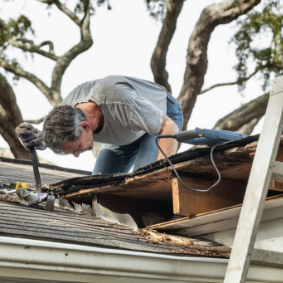
Storms often leave homeowners feeling relieved once everything looks normal again. But damage isn’t always visible right away. Issues like roof damage, hidden leaks, soaked insulation, or electrical problems can go unnoticed until they become costly.
That’s why booking a home inspection Frisco homeowners after a storm matters. Waiting too long can lead to bigger repair bills and insurance complications. Most post-storm issues we see could’ve been caught early with a timely inspection.
What Storms Actually Do to a Home
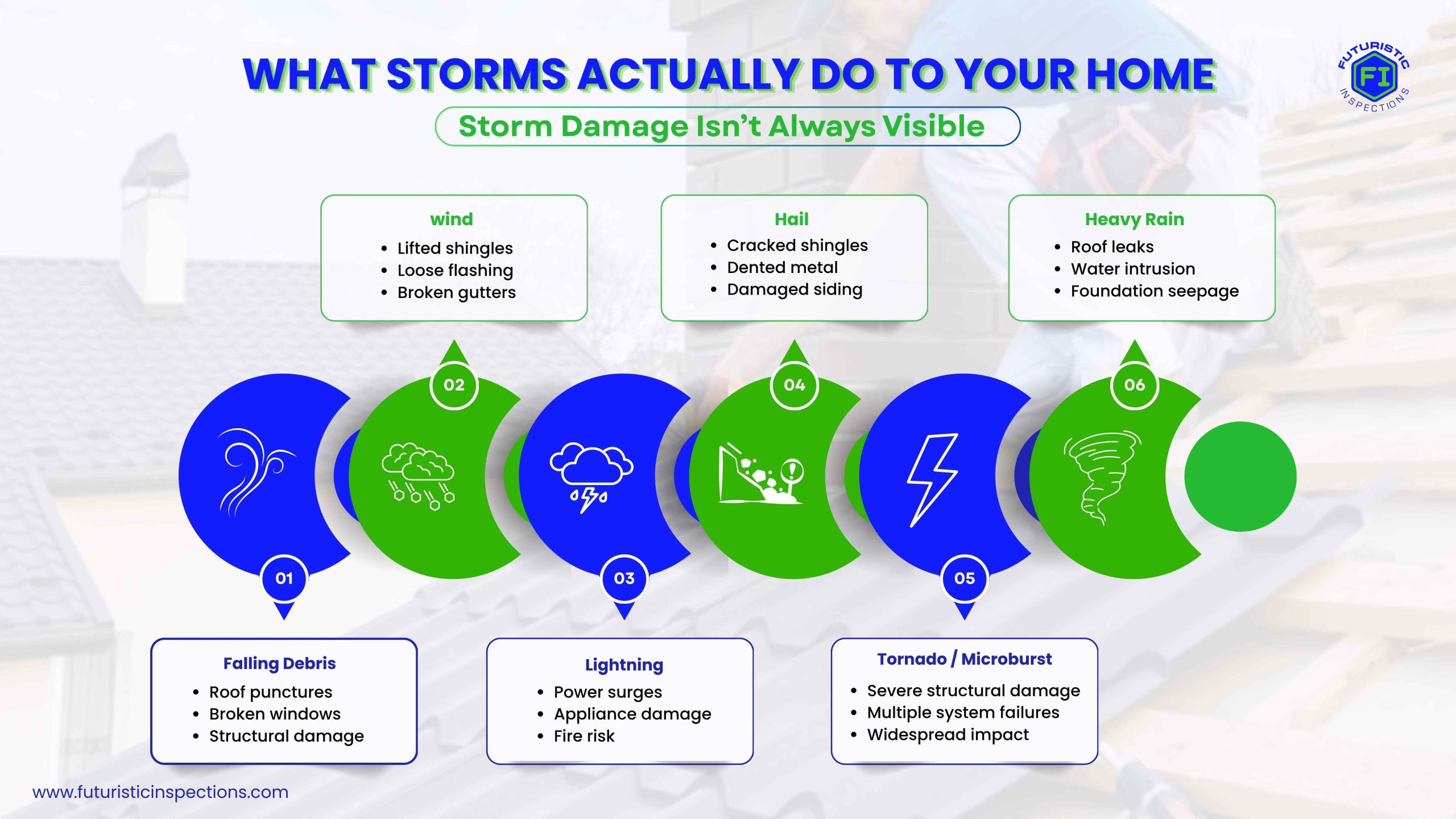
Wind, rain, hail, and falling debris all damage homes in different ways, and the damage is rarely limited to what you can see. Here’s what each type of storm tends to leave behind:
Wind storms: Lifted shingles, loosened flashing, damaged ridge caps, broken seals around vents and skylights, blown-off gutters, twisted soffits, and bent fascia. Wind also drives rain horizontally into seams and joints that normally shed vertical rain just fine.
Hail: Bruised or cracked shingles, dented metal roofing, damaged gutters and downspouts, pitted siding, broken window seals, and damaged outdoor HVAC condensers. Hail damage to a shingle roof is one of the most missed types of storm damage because it doesn’t always look bad to the untrained eye.
Heavy rain: Roof leaks, attic moisture, foundation seepage, gutter overflow, soil erosion, and water infiltration around windows and doors. Heavy rain often reveals weak spots in a roof that were on the verge of failing already.
Falling debris: Punctured roofs, damaged chimneys, dented gutters, broken windows, and structural damage to porches or fences. Tree limbs are the most common culprit, and even small ones can puncture a shingle roof on impact.
Lightning: Surges through the electrical system, damaging appliances, blown circuits, and in serious strikes, structural fire damage that smolders before being noticed.
Tornadoes and microbursts: Pretty much all of the above, often together, often with hours of work needed to even start assessing.
The Damage You Can’t See From Your Driveway
This is the part most homeowners underestimate. Storm damage almost always has a hidden layer. Here’s what hides where:
In the attic, water can soak insulation, stain rafters, and warp roof decking long before the ceiling below shows a stain. If a storm pushes water past your shingles or flashing, the attic is the first place it ends up.
On the roof itself, hail bruises and lifted shingles look minor from the ground. From a ladder, an inspector can spot pulled nails, cracked shingles, and damaged underlayment that will fail in the next storm, even if they didn’t fail in this one.
Around windows, broken seals and damaged caulk let water trickle into the wall cavity. Mold grows there for months before you smell it.
Behind siding, wind-driven rain can wet the wall sheathing without leaving any sign on the outside. Once rot starts, it spreads silently.
In the foundation, heavy rain and saturated soil cause shifting, especially in clay-heavy soil. New cracks appear, old cracks widen, and water finds new paths into basements and crawl spaces.
In the HVAC system, hail and debris can dent the condenser fins, damaging cooling efficiency without obviously breaking the unit.
In the electrical system, lightning surges damage circuit boards, outlets, and appliances in subtle ways that show up days or weeks later.
None of this is visible from the driveway. None of it announces itself. All of it gets worse over time.
The Insurance Timing Problem
This is the one that catches people off guard the most. Most home insurance policies have specific time limits for filing storm damage claims. Some are 30 days, some are 60, some are a year, but the longer you wait, the harder it is to prove the damage was caused by the storm and not by neglect, age, or a later event.
Insurance adjusters look for documentation. They want photos with dates. They want professional reports. They want clear evidence that the damage came from a specific storm, not from years of wear and tear. If you call your insurance company three months after the storm, the adjuster has every reason to ask hard questions about what happened in between.
A post-storm inspection performed within days of the event gives you:
- A dated, third-party report showing exact damage
- Photos and findings from a qualified professional
- A clear basis for filing the claim
- A document that the adjuster takes more seriously than your own photos
- Protection against the carrier saying, “This was already there.”
- A starting point for negotiating the right scope of repairs
Skipping the inspection or waiting too long can mean a claim denied, a smaller payout, or repairs you have to fund yourself.
Mold, Rot, and Secondary Damage
Even if the original storm damage is small, leaving it alone leads to bigger problems fast. Water that soaks insulation creates the perfect conditions for mold within 48 to 72 hours. Wet wood starts rotting within weeks. Saturated drywall loses structural integrity and has to be cut out and replaced. A small leak that would have been a $400 repair right after the storm becomes a $4,000 mold remediation a few months later.
The math here is brutal. A post-storm inspection might cost you $300 to $600. Skipping it can cost you $5,000 in secondary damage that wouldn’t have happened with prompt attention.
What a Post-Storm Inspection Actually Covers
A good post-storm home inspection isn’t a regular home inspection. It’s specifically focused on storm-related damage and insurance documentation. Expect the inspector to check:
- The full roof surface, including shingles, flashing, ridge caps, vents, and skylights
- All gutters and downspouts for damage and proper drainage
- Attic for moisture, daylight infiltration, and stained framing
- Exterior siding, trim, and paint for hail and wind damage
- All windows, doors, and screens for impact damage
- Foundation and slab for new cracks or shifting
- Crawl space (if applicable) for water intrusion
- HVAC condensers and outdoor equipment
- Yard for fallen limbs that may have hit the home
- Detached structures like sheds, garages, and fences
- Electrical system for surge damage indicators
- Any visible water staining inside the home
The inspector documents everything with photos and notes, assembles a written report, and provides recommendations for repairs and insurance follow-up. The whole process usually takes 2 to 4 hours on-site.
When to Schedule an Inspection
Within 48 to 72 hours of the storm is the ideal window. The damage is fresh, conditions are documented close to the event, and any urgent repairs can be addressed before they cause secondary issues. If your area was hit by a major event like a hurricane or hailstorm, schedule as soon as the area is safe to access.
Don’t wait for visible signs of damage. The whole point of a post-storm inspection is to catch what isn’t visible.
What You Should Do First
If a storm just rolled through, here’s the order of operations:
- Make sure everyone is safe, and the home is structurally sound enough to enter.
- Take your own photos of any obvious damage from the ground level.
- Note the date and time of the storm and any specific impacts you witnessed.
- Check your insurance policy for time limits on storm claims.
- Schedule a professional storm damage inspection.
- Avoid making permanent repairs before the inspector has documented the damage.
- Make temporary repairs only as needed to prevent further damage (tarps, plywood, etc.).
- Save all receipts for emergency repairs.
That sequence protects both your home and your claim.
Why Insurance-Friendly Reporting Matters
Not every inspector is set up to write reports that work well with insurance carriers. The right kind of post-storm inspection includes the type of detail and documentation adjusters need. Photos with date stamps, narrative descriptions of damage, references to specific roof areas or building components, and clear distinctions between storm damage and pre-existing wear. A general handyman can’t produce that. A roofing contractor often won’t, because their report is shaped to sell their own services. A neutral, third-party inspector with experience in storm damage gives you the kind of report that holds up in a claim.
Wrapping Up
A storm can do a lot more to a home than you can see standing in the front yard. Skipping the inspection is one of those decisions that feels fine until it isn’t, and by the time it isn’t, you’re looking at bigger repair bills, denied claims, and damage that should have been caught early. A few hours of inspector time after a storm pays for itself many times over in the average case. When you’re ready to schedule a post-storm walkthrough, we’re happy to come take a look and give you a clear picture of what the storm actually did to your home. At Futuristic Inspections, we’ve worked through enough storm seasons to know exactly what to look for and how to document it properly for both your records and your insurance carrier. Give us a call when you’re ready, and we’ll take it from there.
Frequently Asked Questions (FAQs)
How soon after a storm should I get a home inspection?
Within 48 to 72 hours of the storm is best. That window keeps damage tied closely to the storm event for insurance purposes and lets you address urgent issues before they cause secondary damage like mold or wood rot. Don’t wait for visible signs to appear.
Will my insurance pay for a post-storm inspection?
Some policies cover it under the claim if damage is found, while others treat the inspection as the homeowner’s responsibility. Either way, the cost of the inspection is usually small compared to the claim payout it can support. Always document the inspection separately, just in case.
Can a regular home inspector check for storm damage?
Yes, as long as they have specific experience with storm-related damage and insurance documentation. A general inspector who only handles real estate transactions may not produce a report suited for an insurance claim. Ask before booking whether the inspector handles post-storm work regularly.
What’s the most commonly missed type of storm damage?
Hail damage on shingles is the most missed by homeowners. From the ground, an asphalt roof can look fine even when it has dozens of bruised or cracked shingles that will fail in the next year or two. A trained inspector with a ladder spots it quickly.
Do I need an inspection if my home looks completely fine?
Yes, if a significant storm passes through. Storms cause hidden damage all the time, and most of it stays hidden for weeks or months. A short professional inspection right after the storm protects both your home and your insurance claim, even when nothing looks wrong from the ground.