

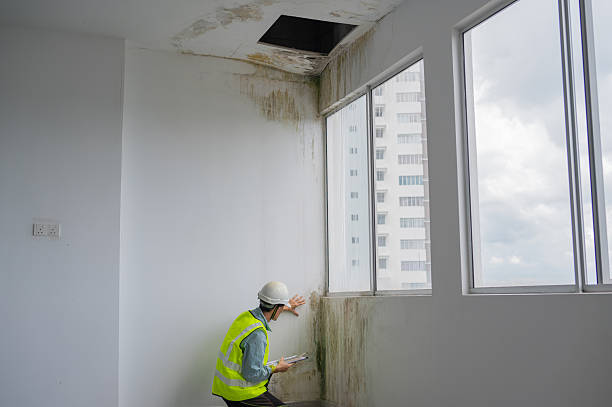
Schedule your inspection in month 10, walk the home room by room, and hand the builder a written punch list before your one-year warranty closes. The defects builders reliably fix free in the last warranty month are the ones that surface after a full North Texas year: drywall cracks at door and window corners from clay-soil movement, nail pops, sticking doors, grout and caulk failures, HVAC rooms that never cool evenly, and small roof or flashing leaks. Book the inspection with three to four weeks of warranty left so you can submit the report and still make claims. In Texas, the builder gets a formal chance to inspect and offer repairs after you give written notice, so timing is everything. Below is the room-by-room checklist and the real calendar.
What You’ll Walk Away With
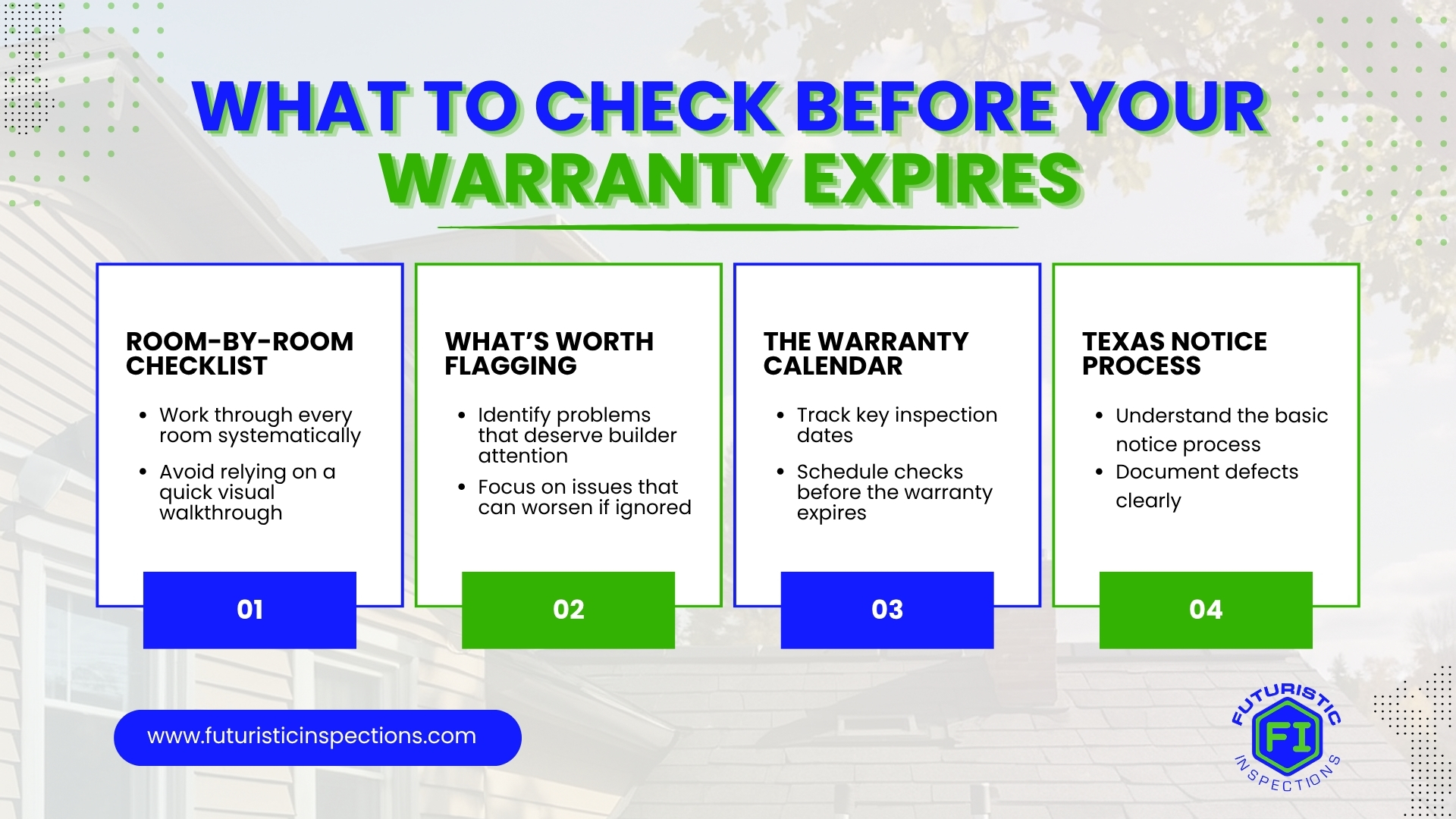
Most new-home warranties in North Texas run one year on workmanship, and most homeowners let that year quietly expire without ever asking the builder to fix what a full season of Texas weather exposed. This guide gives you the exact room-by-room list our inspectors work through, the defects that are worth flagging versus the cosmetic settling that is normal for a first-year DFW home, and the calendar that keeps you inside the warranty window instead of a month past it. You will also see how the Texas notice process actually works, which is the part almost every generic checklist skips and the part that decides whether the builder shows up.
Why the 11th Month Is the Real Warranty Deadline
A builder warranty on a new North Texas home almost always covers one year of workmanship and materials from your closing date. The number in the name is a warning, not a suggestion. You want the home inspected around month 10 or 11 so the written report lands with the builder while you still have coverage, not after it lapses.
Here is the mechanic people miss. In Texas, before you can push a builder to fix defects, you generally have to send written notice describing the problems, and the builder has a right to inspect and respond. Under the Texas Residential Construction Liability Act, that written notice triggers a clock: the builder has 35 days to ask to inspect the home and up to 45 days to make a written offer to repair or settle. Do the math against a warranty that ends on day 365. If you wait until month 12 to even schedule the walk, the coverage can expire before the builder’s response window even closes.
That is why we tell every new-build owner in Frisco, Prosper, and McKinney the same thing: put the inspection on the calendar the month you hit ten months in the house. Do not wait for the anniversary. This is the single most common way people lose repairs they were owed.
Pull your closing paperwork before you start and find your exact closing date, because that date, not your move-in date, is usually when the warranty clock started. A lot of North Texas buyers close a few weeks before they actually move in, which quietly shortens the runway they think they have. Note the real day the year ends, count back a month, and that is your inspection target. Keep the builder’s warranty booklet handy too, since it spells out which items carry the one-year workmanship coverage versus the shorter coverage on things like caulk and paint touch-ups.
The DFW summer wrinkle nobody warns you about
If your one-year mark falls in June, July, or August, move even faster. Builder warranty departments across DFW get slammed in summer, and the trade crews (drywall, HVAC, foundation) who actually do the fixes are booked solid on new starts. We have watched valid punch lists sit for weeks because the framer or the AC sub could not get out before the warranty technically closed. Submitting a clean, written report in month 10 gives the builder no excuse and gives the trades time to schedule you before the deadline.
The Room-by-Room 11-Month Warranty Inspection Checklist
Walk the house the way an inspector does, one zone at a time, writing down every defect with a photo and a location. It is the same disciplined sweep we use on any residential home inspection, just aimed at the workmanship items your builder still owes you. A photographed, room-labeled list is far harder for a builder to wave off than a vague email. Here is the full 11-month warranty inspection checklist we work from on North Texas new builds.
Foundation and exterior
- Diagonal cracks running from the corners of exterior brick or stone openings
- Separation between brick veneer and window or door frames
- Weep holes at the base of the brick that are mortared shut (they should be open)
- Grading that slopes toward the slab instead of away from it
- Standing water or soggy spots near the foundation after rain
- Gaps in exterior caulk at windows, hose bibs, and penetrations
- Fascia, soffit, and trim paint already peeling or splitting
Roof, attic, and drainage
- Lifted, cracked, or nail-exposed shingles visible from the ground or a ladder
- Flashing gaps at valleys, chimneys, and roof-to-wall transitions
- Attic insulation pushed thin or missing over exterior walls
- Bathroom and range vents that dump into the attic instead of outside
- Daylight or water staining on the underside of the roof deck
- Gutters that overflow or drain against the foundation
Interior walls, ceilings, and doors
- Drywall cracks at the top corners of doors and windows (the classic North Texas tell)
- Nail pops down hallways and on ceilings
- Tape seams showing through paint
- Interior doors that stick, drag, or no longer latch
- Gaps opening at baseboards or crown molding
- Squeaky or springy floor spots and separating floor seams
Kitchen and bathrooms
- Toilets that rock or leak at the base
- Sink, faucet, and supply-line drips under every cabinet
- Missing, cracked, or shrinking grout in showers and floors
- Caulk pulling away at tubs, showers, and countertops
- Cabinet doors and drawers that hang crooked or rub
- Dishwasher, disposal, and appliance installs that leak or run rough
HVAC, plumbing, and electrical
- Rooms that never reach the thermostat setting (a summer-only symptom you can only catch after living through DFW heat)
- Uneven airflow between the front and back of the house
- Water heater temperature-and-pressure valve piping and drip pan drain
- Every outlet, GFCI, and AFCI tested for trips and reverse wiring
- Exterior and bathroom GFCIs that do not reset
- Water pressure and drain speed at each fixture
Which Defects Are Actually Builder-Owned (and Which Are Normal)
Not every crack means the builder did something wrong, and part of a useful 11th month warranty inspection is telling the difference so you spend your credibility on the claims that stick.
North Texas sits on Blackland Prairie clay, some of the most expansive soil in the country. It swells when wet and shrinks in drought, and a new slab rides that movement through its first full year. Hairline drywall cracks at the corners of doors and windows, a few nail pops, and doors that stick during a wet spring are usually the house adjusting to that soil, not a defect. They are still worth listing, because builders routinely patch first-year drywall and reset doors under warranty, but they are cosmetic.
What is not normal, and what you should press hard on: cracks wider than about an eighth of an inch, cracks that keep growing, doors and windows that suddenly will not close, sloping floors, or exterior brick cracks that step diagonally through several courses. Those point to foundation movement beyond seasonal, and they belong in the report in bold. The honest read is that most first-year homes have a handful of cosmetic items and zero structural ones. If yours has structural signs, that is exactly why the warranty window matters.
| Defect you find | Usually normal first-year settling | Flag it hard as builder-owned |
| Drywall cracks at opening corners | Hairline, stable, cosmetic | Wide (over ~1/8 inch) or still growing |
| Nail pops | A few scattered | Rows of them, recurring |
| Sticking doors | During the wet season, then eases | Will not latch year-round, frame racked |
| Floor movement | Slight seasonal squeaks | Visible slope, separating seams |
| Exterior brick | Tight hairlines | Stair-step cracks through several courses |
| Grout and caulk | Minor shrinkage | Widespread failure, active leaks behind it |
How to Turn the Checklist Into Repairs the Builder Actually Makes
A checklist only helps if the report gets used correctly. Here is the sequence that works in DFW.
First, get the whole house inspected in month 10 and receive a written report with photos and locations. A full new construction and 11th-month builder warranty inspection covers every zone in the checklist above and produces exactly the kind of documented punch list a builder responds to. Second, send that report to your builder’s warranty department in writing, not a phone call, and keep a dated copy. In Texas, written notice by certified mail with return receipt is the safe way to start the formal process, because it proves what you sent and when.
From there, the Texas process gives the builder a defined window to inspect and respond, up to 35 days to request their own look and up to 45 days to put a repair or settlement offer in writing. Let them inspect. Be present, hand them the photographed list, and walk the items in person. Most reputable North Texas builders would rather fix a punch list than argue, especially when the report is specific and delivered with weeks to spare. The homeowners who get stonewalled are almost always the ones who called in month 12 with a vague complaint.
If your builder pushes back on a genuine structural item, that written, dated, professional report becomes the record you or an attorney would rely on. You hope you never need it. Having it is the whole point of doing this on time.
One practical note from the field: keep your own copy of everything and log the dates. Note the day you sent the report, the day the builder acknowledged it, the day they inspected, and what they agreed to fix in writing. We have seen homeowners get everything on the list repaired simply because they stayed organized and polite while the paperwork made the timeline impossible to argue with. Builders juggle dozens of warranty files at once, and the owner with the clean, dated record is the one who does not fall through the cracks.
What a good report looks like
A report the builder acts on is specific, not a complaint. Every item names the room, describes the defect plainly, and carries a photo. “Master bath, grout cracked and missing along the shower curb” moves faster than “the tile looks bad.” Group the items by room so a trade crew can work through them in one visit, and separate the cosmetic settling items from anything structural so the builder can triage. The goal is a document a warranty manager can hand straight to a drywall or plumbing sub without needing to call you back for clarification.
Final walkthrough versus the 11-month inspection
People mix these up. Your pre-closing walkthrough happens before you get the keys and catches the obvious: unfinished trim, scratched glass, missing hardware. The 11-month inspection is a different animal, because it catches what only shows up after the house has lived through a full cycle of North Texas seasons: the clay-soil movement, the summer HVAC load, the first heavy storms hitting the roof, the caulk and grout that shrink over a year. Both matter. If you skipped a real independent inspection at closing, the 11-month visit is your last chance to get the builder to make it right for free.
Where to go from here
The window closes faster than most owners expect, and the North Texas summer repair backlog makes month 10 the smart target, not month 11. If you want a photographed, room-by-room report your builder cannot brush off, the team at Futuristic Inspections has walked new builds across Frisco, Plano, McKinney, and Prosper for over a decade. You can schedule your inspection online while you still have warranty runway, hand your builder a clear punch list, and let the coverage you already paid for do its job before it expires.
Frequently Asked Questions
What should an 11th-month warranty inspection checklist cover?
A complete 11th-month warranty inspection checklist covers foundation and grading, roof and attic, interior walls and doors, kitchen and bathrooms, and HVAC, plumbing, and electrical. It flags every workmanship defect the builder should repair, with photos and room locations, before the one-year warranty ends.When should I schedule my 11-month warranty inspection?
Schedule it in month 10 or early month 11, never month 12. You need three to four weeks of warranty left so the written report reaches the builder and the Texas notice-and-repair process can play out before coverage expires. In DFW summers, book even earlier.Are drywall cracks normal in a new North Texas home?
Hairline drywall cracks at door and window corners are common first-year settling on North Texas clay soil and are usually cosmetic. Builders still patch them under warranty. Cracks wider than about an eighth of an inch, or ones that keep growing, deserve a harder look.Will the builder actually fix items from an 11th-month warranty inspection?
Most North Texas builders repair a specific, photographed punch list submitted in writing while the warranty is active. Texas law gives them a defined window to inspect and offer repairs after your written notice, so a timely, detailed report is far more likely to get results.How is a warranty inspection different from my closing walkthrough?
The closing walkthrough catches obvious cosmetic misses before you get the keys. The 11-month warranty inspection catches what only appears after a full year of North Texas weather, including soil movement, summer HVAC strain, roof wear, and shrinking grout and caulk.