

If you’re researching a home inspection in DFW, you’re likely trying to answer one important question: What does a home inspection really tell me? Buyers, sellers, homeowners, and real estate professionals across North Texas often feel uncertain about inspections because reports can appear technical, lengthy, or overwhelming at first glance.
At Futuristic Inspections, we believe inspections should do the opposite. A modern, professional home inspection should remove confusion, not create fear. The purpose is clarity. Helping you understand a property’s condition so you can make informed, confident decisions without pressure.
This guide explains what a home inspection actually includes, what it does not include, how to read a home inspection report, and how inspection findings are typically used in real DFW real estate transactions.
Why Home Inspections Exist (And What Their Real Purpose Is)
One of the most common misconceptions is that a home inspection is a test a house either passes or fails. In reality, homes do not “pass” or “fail” inspections.
The real purpose of a home inspection is to:
- Provide an objective snapshot of a property’s condition at a specific point in time
- Identify visible defects or safety concerns
- Evaluate the condition of major systems
- Support informed decision making for buyers and sellers
Home inspections help answer practical questions like:
- What condition are the home’s major systems in right now?
- Are there safety issues I should be aware of?
- Which items are normal wear versus higher priority concerns?
For buyers, inspections reduce uncertainty.
For sellers, inspections help set realistic expectations.
For homeowners, inspections support proactive maintenance planning.
What a Standard Home Inspection Includes in DFW
A general residential home inspection evaluates visible and safely accessible components of a home. Modern digital inspection reports include photos, summaries, and plain language explanations. In the DFW area, this typically includes:
- Roofing systems – materials, visible damage, flashing, and drainage
- Exterior components – siding, trim, grading, and drainage patterns
- Foundation and structure – visible cracking, movement, or distress indicators
- Electrical systems – panels, breakers, wiring methods, outlets, and safety devices
- Plumbing systems – water supply lines, drains, fixtures, and water heaters
- HVAC systems – heating and cooling operation at the time of inspection
- Interior components – walls, ceilings, floors, doors, windows, and stairways
- Attic and insulation – when safely accessible
A home inspection is non-invasive and represents a snapshot in time, not a prediction of future performance.
Built for Today’s Buyers: A Smarter Inspection Experience
At Futuristic Inspections, modern technology is not an extra feature. It is the foundation of how we serve our clients.
Every inspection is performed using advanced tablet based software designed to create clear, modern digital reports with embedded photos, organized summaries, and plain language explanations. You receive this level of clarity every time. No exceptions.
Your report is not just thorough. It is intuitive. Findings are documented in real time, categorized for easy review, and presented in a way that helps you understand what matters most. The result is greater accuracy, faster delivery, and a smoother overall experience.
The technology exists for one reason: you.
We integrated advanced reporting systems because buyers and sellers deserve clarity without confusion. If you have questions, we take the time to walk you through the report, explain findings, and ensure you feel confident about your next steps. Staying late to answer questions or providing additional context is simply part of our commitment to going above and beyond for our clients.
Modern tools. Clear communication. Client first service.
That is what a next generation inspection experience looks like.
What a Home Inspection Does Not Include
Understanding what is not included is just as important as knowing what is.
A standard home inspection does not:
- Predict future system failure
- Provide code compliance certification
- Include cosmetic or design opinions
- Involve destructive or invasive testing
In some cases, additional inspections may be recommended, such as:
- Sewer camera inspections
- Termite (WDI) inspections
- Foundation evaluations
- New construction or 11month warranty inspections
- Commercial property inspections
These services provide deeper insight when conditions or property type warrant them.
Common Home Inspection Misconceptions Buyers and Sellers Have
Many people searching “how to read a home inspection report” feel overwhelmed due to a few common misunderstandings:
“A long report means the home is in bad condition.”
Thorough inspections often result in longer reports because they include photos, explanations, and documentation, not because there is anything wrong.
“Everything in the report must be fixed.”
Most reports include a mix of safety issues, repair items, and routine maintenance.
“Inspectors decide what should be negotiated.”
Inspectors provide objective information. Buyers, sellers, and agents decide how that information is used.
Clear explanations help keep inspections in perspective and reduce unnecessary stress.
How to Separate Major Concerns From Normal Wear and Maintenance
One of the most valuable aspects of a DFW home inspection report is prioritization.
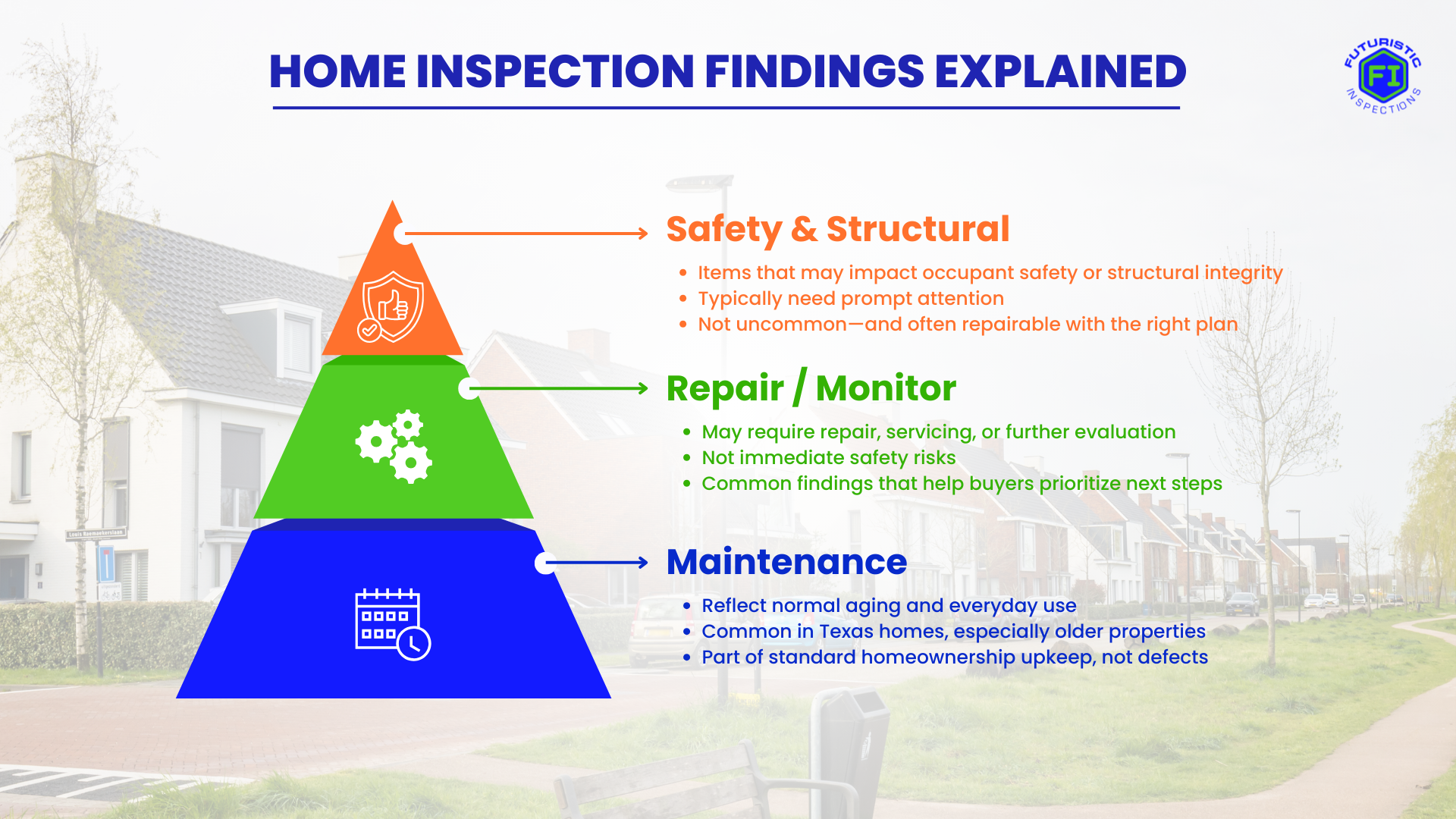
Inspection findings typically fall into three categories:
- Major concerns: Items that may affect safety, structure, or system performance and typically require prompt attention.
- Repair or monitor items: Issues that may need repair or further evaluation but are not immediate risks.
- Routine maintenance and wear: Normal aging and upkeep common in Texas homes, especially older properties.
Understanding these categories helps buyers avoid overreacting and helps sellers better prepare for negotiations.
Where Modern Inspection Technology Adds Clarity
Modern inspection tools help inspectors gather better data and explain findings more clearly.
At Futuristic Inspections, advanced technology may include:
- Thermal imaging inspections to identify temperature anomalies related to moisture or insulation
- Sewer camera inspections to evaluate underground sewer lines
Technology doesn’t replace experience, it enhances understanding by showing clients what we see and explaining what it means.
What Happens After the Home Inspection?
After the inspection:
- You receive a detailed digital inspection report, typically within 24 hours or less
- Findings are organized, documented, and explained clearly
- Buyers and sellers review results with their real estate agents
- Decisions are made based on goals, timelines, and priorities
Inspection reports are often used to:
- Support negotiations
- Plan repairs or maintenance
- Understand long term ownership costs
- Reduce post closing surprises
The report is a tool for clarity, not a verdict.
How Futuristic Inspections Supports Buyers, Sellers, and Realtors Across DFW
Serving Collin County, Dallas County, Denton County, and Tarrant County, Futuristic Inspections is built around one principle: clarity builds confidence.
We support clients with:
- Plain language explanations before, during, and after inspections
- Calm, objective communication
- Advanced inspection technology
- Easy to understand reports delivered quickly
- Modern digital inspection reports with photos and summaries.
From buyer home inspections and pre-listing inspections to new construction inspections, 11 month warranty inspections, sewer camera inspections, termite (WDI) inspections, foundation checks, and commercial property inspections, our role is to help you understand the property clearly.
Final Thought: A Home Inspection Is a Confidence Tool
A home inspection should never leave you feeling overwhelmed or pressured. When done correctly, it provides insight, context, and confidence. Helping you move forward informed and prepared.
If you’re still researching “home inspector near me” or have questions about what inspections include in Texas, we’re always happy to explain.
Schedule your inspection at future@futuristicinspections.com or call (469) 573-4677.
Frequently Asked Questions (FAQs)
What does a home inspection include in Texas?
A Texas home inspection evaluates visible and accessible components such as the roof, foundation, electrical, plumbing, HVAC, and interior systems.
How long does a home inspection take?
Most residential home inspections take 2–4 hours, depending on size, age, and condition.
How do I read a home inspection report?
Start with summary sections and major concerns, then review repair and maintenance items for planning purposes.
Are home inspections required in Texas?
No, but they are strongly recommended to help buyers understand property conditions before closing.
What fails a home inspection?
Homes do not fail inspections. Reports provide information so buyers and sellers can make informed decisions.
Is a home inspection worth it for new construction?
Yes. New construction and 11 month warranty inspections often identify workmanship issues before builder warranties expire.
How soon do you get inspection results?
With Futuristic Inspections, reports are typically delivered within 24 hours or less.